


2026 Hyundai Sonata vs Toyota Camry – Which Sedan Wins Your Garage?
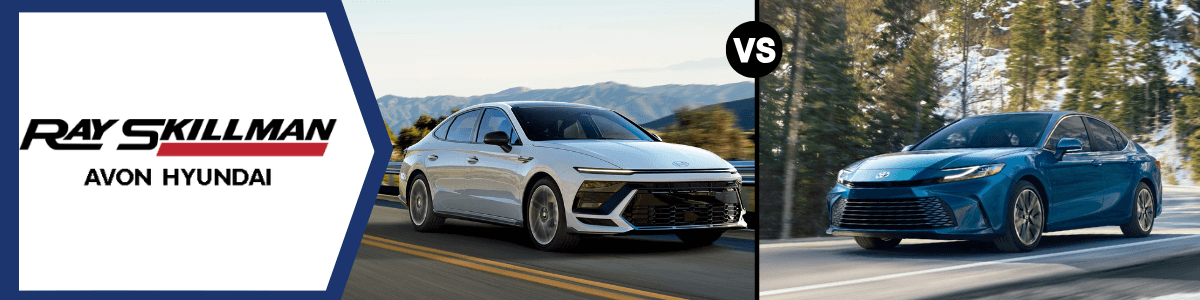
Shopping for a midsize sedan in 2026 comes down to two seriously good choices. Hyundai’s Sonata brings variety with three different powertrains and wallet-friendly pricing, while Toyota goes all-in on hybrids with the Camry. Both sedans pack modern tech, strong safety features, and enough space for the whole family. But which one actually fits your needs better?
- Sonata starts at $28,545 and offers gas, hybrid, and performance options, giving you real choice in how you drive.
- Toyota’s Camry costs $29,000 to start and comes hybrid-only across the lineup, with available all-wheel drive on every trim.
- Your decision hinges on whether you want powertrain flexibility or Toyota’s refined hybrid-only approach.
What You Get With Each Sedan
Walk into a Hyundai dealership and you’ll find three completely different Sonatas. Base SE models use a 191-horsepower 2.5-liter four-cylinder that gets 32 mpg combined. Need better fuel economy? Sonata Hybrid delivers 47 mpg combined with its 192-horsepower setup. Then there’s the wild card. N Line trims pack a turbocharged 2.5-liter making 290 horsepower and 311 lb-ft of torque. That’s enough power to dust most family sedans off the line.
Toyota took a different path with every 2026 Camry using a 2.5-liter four-cylinder hybrid system. Front-wheel drive versions make 225 horsepower and achieve up to 51 mpg combined. Add all-wheel drive for $1,525 and you get 232 horsepower with 46-50 mpg depending on trim. No gas-only option exists anymore.
This 2026 Hyundai Sonata vs Toyota Camry comparison really comes alive when you look at how each brand thinks about efficiency. Hyundai says “pick your poison” with gas, hybrid, or performance options. Toyota says “trust us, hybrid is the way” and builds every Camry around that philosophy.
Inside Both Cabins
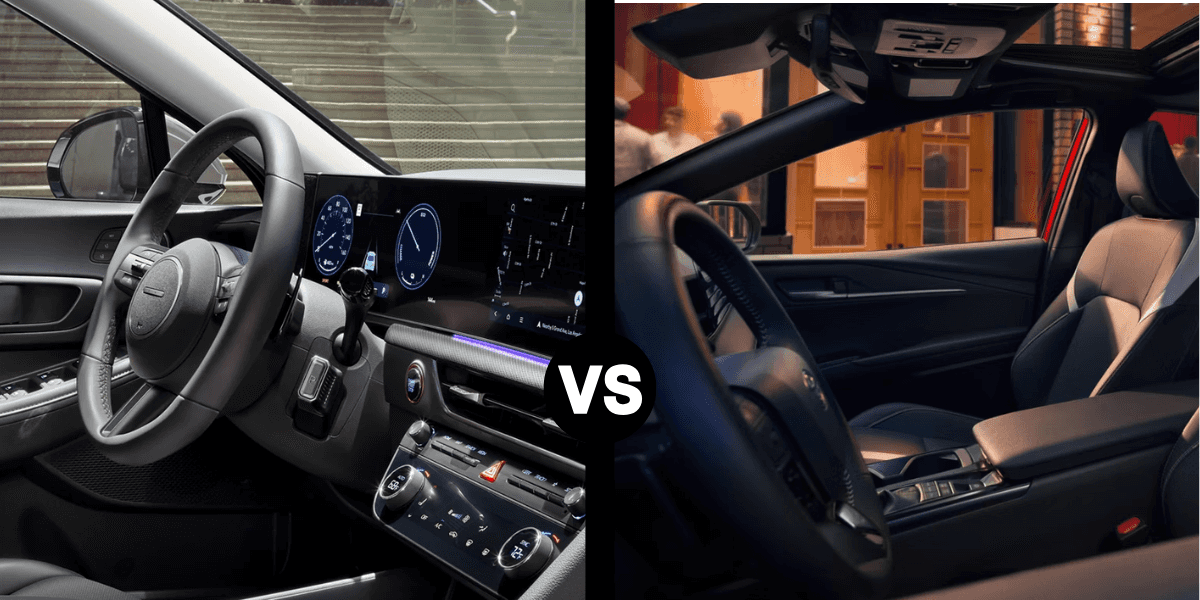
Both sedans give you modern tech without making you feel like you need a computer science degree. Base Sonata SE models get a 12.3-inch touchscreen right from the start, along with wireless Apple CarPlay and Android Auto. Front seats are heated, and you get a decent six-speaker sound system. Step up to SEL Sport and you add wireless charging, a leather-wrapped wheel, and 18-inch wheels. N Line throws in sport seats and 19-inch wheels to match its rowdy engine.
Toyota’s base LE starts with an 8-inch screen and a 7-inch digital gauge cluster. That’s fine for basic needs, but real magic happens when you jump to XLE or XSE trims. You get a 12.3-inch touchscreen and matching 12.3-inch digital instrument panel. Upper trims also add genuine leather seats, heated and ventilated front seats, and a heated steering wheel. Available JBL premium audio with nine speakers brings concert-quality sound.
Rear passengers get 38 inches of legroom in both sedans. Trunk space sits at 15.6 cubic feet in the Sonata and 15.1 in the Camry. Neither one will leave you cramped on road trips.
Safety Tech That Actually Helps
You won’t find stripped-down base models here. Both automakers load up their sedans with driver assistance features as standard equipment. Sonata models include forward collision warning, automatic emergency braking, blind spot monitoring, lane keeping assist, adaptive cruise control, and rear cross-traffic alert. Every single trim gets these features.
Toyota matches that with its Safety Sense 3.0 suite. You get forward collision warning, automatic emergency braking, adaptive cruise control, lane departure prevention, and automatic high beams. Camry also includes Toyota’s Proactive Driving Assist, which provides gentle braking and steering inputs to help maintain distance from other vehicles and pedestrians.
The Money Talk
Hyundai undercuts Toyota by $455 on base models. Sonata SE starts at $28,545 while Camry LE begins at $29,000. That gap widens when you compare hybrids. Sonata Hybrid Blue costs $30,295 compared to the Camry’s hybrid-only approach at $29,000. But remember, Camry forces you into hybrid territory while Sonata gives you options.
Want serious performance? Sonata N Line at $37,145 demolishes Camry’s top trim on power. No Camry comes close to 290 horsepower. But if you want all-wheel drive, Toyota’s $1,525 upcharge gets you there on any trim. Hyundai only offers AWD on SEL Sport.
Warranty coverage favors Hyundai significantly. You get 5 years/60,000 miles basic and 10 years/100,000 miles powertrain protection. Toyota offers 3 years/36,000 miles basic and 5 years/60,000 miles powertrain. That’s a huge difference if you plan to keep the car long-term.
Which One Makes Sense For You
Buy the Sonata if you want choice. You can go cheap with the base gas engine, efficient with the hybrid, or thrilling with the N Line turbo. Hyundai’s warranty also gives you better long-term peace of mind. This sedan delivers real performance options without forcing you into one approach.
Choose Camry if you’ve already decided hybrid is your future. Toyota’s commitment to electrification across the entire lineup means every Camry sips fuel efficiently. Available all-wheel drive on any trim adds versatility, and Toyota’s reputation for reliability speaks for itself.
Test drive both sedans back-to-back. Feel how Sonata’s optional turbo pulls compared to Camry’s refined hybrid system. Check which interior layout works better for your phone, keys, and coffee. These details matter more than spec sheets once you’re living with the car daily.
Experience the Sonata Difference in Avon
Reading about the Sonata’s three powertrains is one thing. Actually feeling the difference between the base engine, hybrid, and that 290-horsepower N Line turbo is something else entirely. We keep all three at Ray Skillman Avon Hyundai so you can compare them yourself on real roads around Indianapolis. Our team knows these cars inside and out because we work with them every day. Want to see how the 12.3-inch touchscreen actually responds? Curious if the back seat really works for your kids’ car seats? We’ll give you the time to figure that out without hovering. Stop by our showroom on US Highway 36 in Avon and take a Sonata (or two) for a proper test drive. You’ll get straight answers about warranty coverage, real-world fuel economy, and which trim actually makes sense for your budget.